Table Of Content
- Hypersonic
- About the Long Range Fires Weapons System
- Army Selects SM-6, Tomahawk For Ground Launchers
- The US Navy has an upgraded Tomahawk: Here’s 5 things you should know
- US Marines Stand Up First Tomahawk Battery
- Efficiency in modern warfare
- Sorry, you have been blocked
- The Tomahawk Cruise Missile: Subsonic Long-range, all-weather weapon

That’s the Tomahawk’s key differentiator, said Jerry Hendrix, a retired Navy captain and analyst with Telemus Group. The submarines USS Louisville and USS Pittsburgh launched Tomahawks in 1991 at targets in Iraq and became the first submarines to fire Tomahawks while submerged. Raytheon received a $122m contract from the US Navy in March 2015 for the production of 114 Tomahawk Block IV all-up round missiles.
Hypersonic
The missile uses electromagnetic emissions to detect, track, and home in on enemy ships. Roughly 800 Tomahawks were fired in Operation Iraqi Freedom in 2003 and about 200 were used in Desert Storm, Raytheon officials said. Tomahawk missiles weigh 3,500 pounds with a booster and can travel at subsonic speeds up to 550 miles per hour at ranges greater than 900 nautical miles.
About the Long Range Fires Weapons System
Tomahawks may be retasked in flight, possibly circling for a period before their human handlers select another target for them to attack. Tomahawks can also use their onboard cameras to transmit battle-damage assessment data back to military analysts. Block Vb has a joint multi-effects warhead that allows the Tomahawk to hit more diverse land targets. It is a hard-target kill variant that is capable of destroying densely-constructed enemy assets which previously would have required more specialized munitions. Raytheon’s Tomahawk Block V, when fully realized in its Block Va and Block Vb varieties, will be expected to hit surface ships at Tomahawk ranges – in excess of 1,000 miles – with the integration of a new seeker.
Army Selects SM-6, Tomahawk For Ground Launchers
With the introduction of the Polaris, cruise missiles disappeared from the Navy in favor of long-range ballistic missiles, only to return in the 1970s with the Tomahawk. Unlike the Loon and the Regulus, which were cumbersome and slow to launch, the advanced radar and turbofan engine technology available in the 1970s made the Tomahawk an especially versatile and effective weapon system. President Ronald Reagan thought so, and he re-activated four World War II-era Iowa-class battleships (the Missouri, New Jersey, Wisconsin, and Iowa), and the Navy fitted their already formidable weapons arrays with Tomahawk missile batteries. Built to counter Soviet air defenses years ago, Tomahawks often fly parallel to the surface of the ocean to elude enemy radar. The combat success of the Tomahawk, and the Army’s need for ground-based fires at longer ranges, has inspired what is now an emerging land-launched Tomahawk variant to enter service in the next year or two. The ABLs were also installed on eight Spruance-class destroyers, the four Virginia-class cruisers, and the nuclear cruiser USS Long Beach.
HISTORY reviews and updates its content regularly to ensure it is complete and accurate. Clark, the Hudson analyst, agreed that the mix was important, saying that even with the arrival of faster missiles, the Tomahawk has a place. But there are good reasons to keep producing the Tomahawk, even with its slower speeds. “It has greater electronic hardening to be able to work through jamming more effectively,” Clark said. “The hardening and the electronic countermeasures they’ve put into it make it harder to find and target with radar, and that improves its survivability.
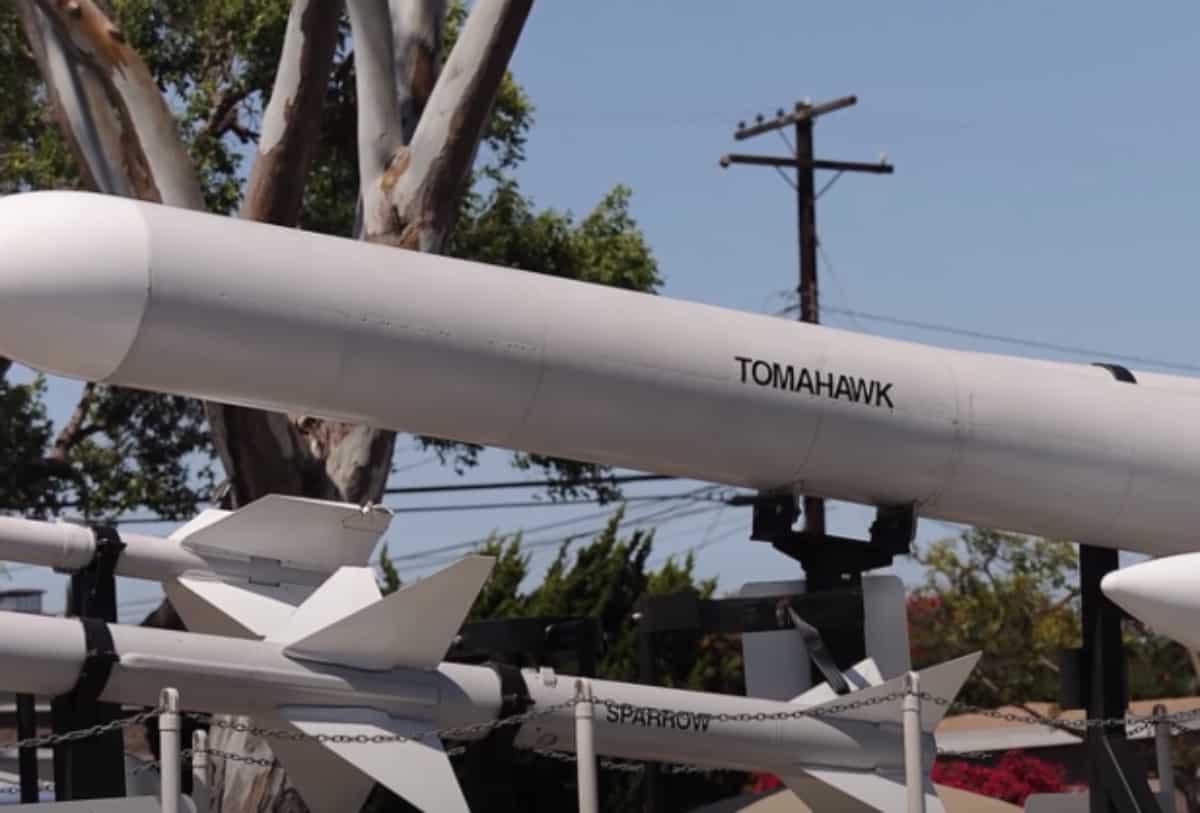
US Marines Stand Up First Tomahawk Battery
Our Tomahawk is a prototype vehicle that the Convair Division of the General Dynamics Corporation built and tested on four occasions from 1976 to 1978. Launched from surface ships and submarines, operational missiles flew at 885 kilometers per hour (550 miles per hour) and used sophisticated terrain-hugging radar to cover a range of about 2,414 kilometers (1,500 miles). Capable of carrying conventional explosives or a nuclear warhead, the Tomahawk represented the state-of-the art in pilotless aircraft technology after it entered service in the 1980s. The United States, Russia, North Korea, India, Iran, South Korea, Israel, France, China and Pakistan have developed several long-range subsonic cruise missiles. These missiles have a range of over 1,000 kilometres (620 mi) and fly at about 800 kilometres per hour (500 mph).[37] They typically have a launch weight of about 1,500 kilograms (3,300 lb)[38] and can carry either a conventional or a nuclear warhead. Earlier versions of these missiles used inertial navigation; later versions use much more accurate TERCOM and DSMAC systems.
As of now, the United States and the United Kingdom are the only countries to deploy Tomahawk missiles, although Australia and Japan have put out bids to purchase Tomahawks. Tomahawk Block IV missile demonstrated its moving target capability in tests conducted in February 2015. The US Government approved an agreement in 2003 to deliver 65 Tomahawk Block IV missiles for the UK. In August 2004, the US Navy placed a $1.6bn multi-year procurement contract with Raytheon for 2,200 Tomahawk Block IV missiles.
Sorry, you have been blocked
The two-way satellite communications are used to perform post-launch mission changes throughout the flight. The on-board camera provides imagery of the target to the commanders before the strike. The Tomahawk Block IV uses GPS navigation and a satellite data-link to continue through a pre-set course. It can be armed with a nuclear or unitary warhead or a conventional submunitions dispenser with combined-effect bomblets. The Block Va variants will be named Maritime Strike and have the capability of hitting a moving target.
The Tomahawk Cruise Missile: Subsonic Long-range, all-weather weapon
The U.S. Defense Department, "Military and Security Developments Involving the People's Republic of China," in October estimated China has more than 370 ships and submarines — more than the U.S.’s less than 300. The U.S. military on Monday confirmed it had on April 11 placed a mid-range capability missile system on northern Luzon in the Philippines as part of joint military exercises called Salaknib 24. It’s the first time since the Cold War that the U.S. deployed such a system in Asia. Beyond its use by the US, the Tomahawk missile has also been used by the United Kingdom’s Royal Navy in a number of operations, and now all Royal Navy fleet submarines are Tomahawk missile capable.
Over water, the Tomahawk uses inertial guidance or GPS to follow a preset course; once over land, the missile's guidance system is aided by terrain contour matching (TERCOM). Terminal guidance is provided by the Digital Scene Matching Area Correlation (DSMAC) system or GPS, producing a claimed circular error probable of about 10 meters. The Tomahawk is designed to operate at very low altitudes while maintaining high-subsonic speeds. Its modular design enables the integration of numerous types of warheads, guidance and control systems.
Additionally, it flies at an altitude of between 100 and 300 feet, much lower than conventional fighter aircraft. The Tomahawk (/ˈtɒməhɔːk/) Land Attack Missile (TLAM) is a long-range, all-weather, jet-powered, subsonic cruise missile that is primarily used by the United States Navy and Royal Navy in ship and submarine-based land-attack operations. Raytheon was awarded a $346m production contract for 473 Tomahawk Block IV cruise missiles in March 2006.
Like a lot of weapons in America’s arsenal, the Tomahawk missile is old—at least in concept. What started out as a nuclear-capable missile can now hunt down warships at 1,000 miles and attack hardened underground targets. The missile’s ability to adapt with the times, take on new roles, and reinvent itself means it will be a potent weapon system for easily another decade to come. Block Va allows this variant of the Tomahawk to strike moving targets at sea. It has a new seeker that is capable of accurately identifying and targeting warships as far as 1,000 miles away.
With all the emphasis on supersonic and hypersonic missiles and with the improvements in air defenses, that might make Tomahawk seem like a fuddy-duddy by comparison. In 2017, Raytheon’s Tomahawk program manager told reporters at an event at the missile plant in Tucson, Ariz., that the navigation system upgrades will ensure the missile can strike targets even if GPS is taken down. The first iteration of the Block V upgrades the missile’s communication and navigation systems. This is about making it tougher to counter and detect electronically, said Bryan Clark, a retired submarine officer and senior fellow at The Hudson Institute. The Tomahawk Block IV missile is powered by a Williams International F415 cruise turbo-fan engine and ARC MK 135 rocket motor.
Army Activates Latest Land-Based SM-6, Tomahawk Battery Based on Navy Tech - USNI News - USNI News
Army Activates Latest Land-Based SM-6, Tomahawk Battery Based on Navy Tech - USNI News.
Posted: Thu, 18 Jan 2024 08:00:00 GMT [source]
The main advantages were speed (although not sufficient to outperform contemporary propeller-driven interceptors) and expendability. Bomber-launched variants of the V-1 saw limited operational service near the end of the war, with the pioneering V-1's design reverse-engineered by the Americans as the Republic-Ford JB-2 cruise missile. While ballistic missiles were the preferred weapons for land targets, heavy nuclear and conventional weapon tipped cruise missiles were seen by the USSR as a primary weapon to destroy United States naval carrier battle groups.


No comments:
Post a Comment