Table Of Content

Additionally, there had previously been expressed interest in acquiring the missile by countries like Spain, the Netherlands, Canada, and Australia, though many had not followed through with their orders. Development of what would become the Tomahawk began in the 1940s, but the emergence of the Polaris ballistic missile program led to its shelving. Technological advances made it possible for the missile to be revisited in the 1970s, and the new weapon was introduced by defense contractor McConnell Douglas in 1983. The actual payload of the Tomahawk can consist of a number of different munitions. But the primary warhead of the Tomahawk is a 1,000-pound high explosive charge.
War News Military History Military News
There are several actions that could trigger this block including submitting a certain word or phrase, a SQL command or malformed data. For the past 30 years, the Tomahawk hung from the ceiling just a few dozen feet from the German V-1 flying bomb, or “buzz bomb,” that saw action in Europe during World War II. The V-1 and the Tomahawk, variants of which are still in service in the Navy, frame an important episode in the history of missile development in the United States. The recent deinstallation of the Tomahawk provides an opportunity to recount some of the highlights of this fascinating story of technological evolution. On December 17, 2009, 41 civilians–mostly women and children–were killed by missiles targeting an alleged Al-Qaeda training camp in Yemen. Although U.S. and Yemeni government officials initially denied responsibility, an investigation by Amnesty International—and revelations by WikiLeaks—eventually concluded that the missiles had been American Tomahawks launched from a naval vessel.
U.S. deploys midrange missile system in Indo-Pacific for first time - The Japan Times
U.S. deploys midrange missile system in Indo-Pacific for first time.
Posted: Tue, 16 Apr 2024 05:54:00 GMT [source]
Why have I been blocked?
In 1944, during World War II, Germany deployed the first operational cruise missiles. The V-1, often called a flying bomb, contained a gyroscope guidance system and was propelled by a simple pulsejet engine, the sound of which gave it the nickname of "buzz bomb" or "doodlebug". Accuracy was sufficient only for use against very large targets (the general area of a city), while the range of 250 km was significantly lower than that of a bomber carrying the same payload.
The Tomahawk Cruise Missile: Subsonic Long-range, all-weather weapon
The US Navy will use the upgraded Tomahawk cruise missiles beyond 2040. Raytheon was contracted to integrate the upgraded navigation and communication systems into the Block IV Tactical Tomahawk (TACTOM) missile in March 2020. Army selected the Navy’s Standard Missile-6 (SM-6) and the BGM-109 Tomahawk for its Mid-Range Capability (MRC), part of the service’s ground-launched strike modernization effort. Following the selection, the Army awarded a $339.3 million contract to integrate both weapons for a ground-based launcher by late 2022. The United States Air Force's first operational surface-to-surface missile was the winged, mobile, nuclear-capable MGM-1 Matador, also similar in concept to the V-1. Deployment overseas began in 1954, first to West Germany and later to the Republic of China and South Korea.
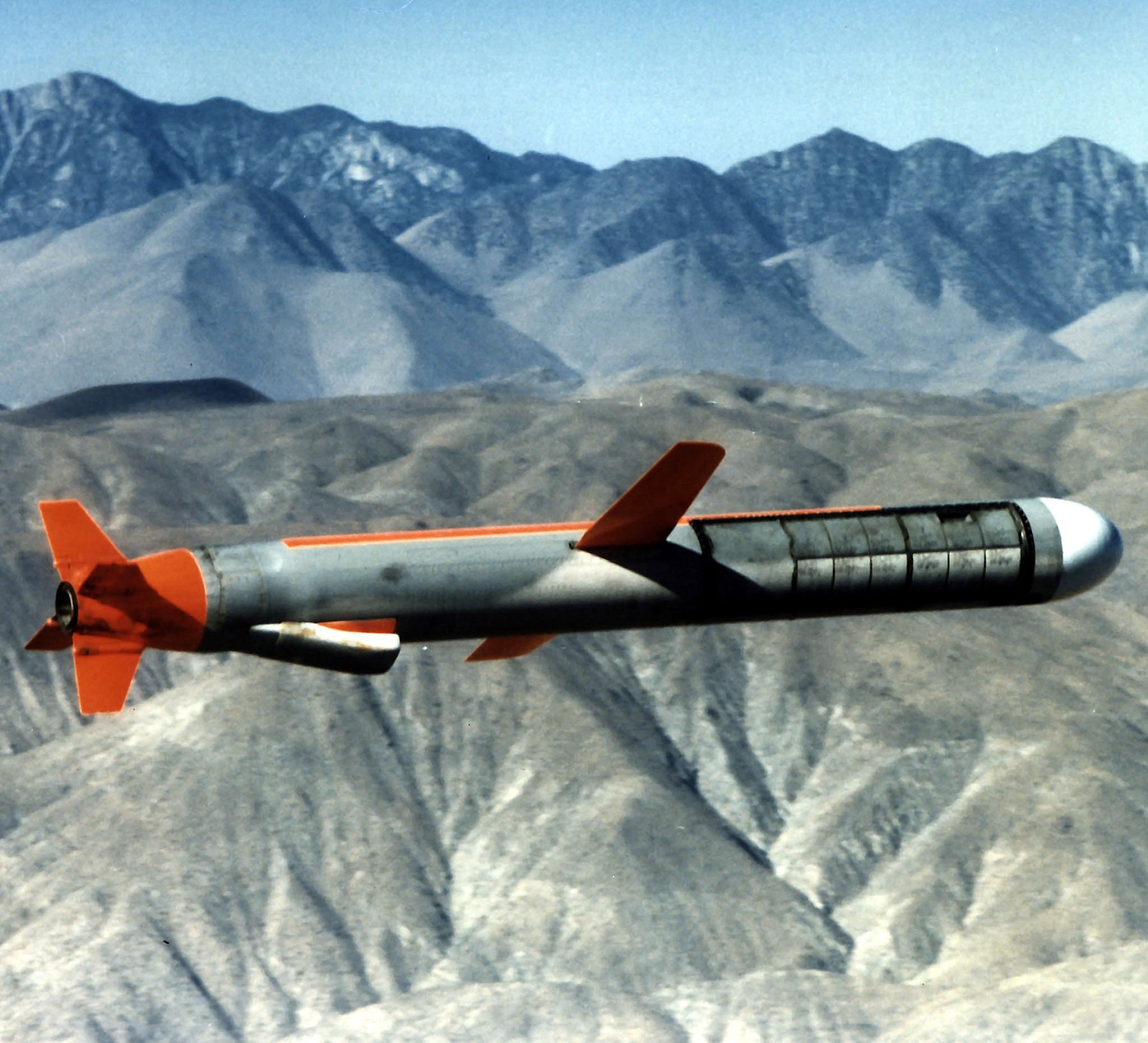
While the Tomahawk is on loan to the National Museum of the American Indian, visitors to the National Air and Space Museum can view our rich collection of cruise missiles on display at the Steven F. Udvar-Hazy Center in Chantilly, Virginia. Visitors can see the JB-2 Loon, the Regulus 1, the Matador, and the test and operational versions of the Air Force’s Air Launched Cruise Missile. And do not forget to visit the National Museum of the American Indian to see the Tomahawk when it goes on display. After achieving flight, the missile's wings are unfolded for lift, the airscoop is exposed and the turbofan engine is employed for cruise flight.
China rebukes US deployment of missiles in Indo-Pacific
The exact guidance system and navigational dynamics of the Tomahawk missile are classified. However, it is known that it can use GPS or inertial guidance systems to hit the target. Navy states that up to 15 targets can be pre-programmed for missile salvos.
The Tomahawk Missile in Use
In the Soviet Union, Sergei Korolev headed the GIRD-06 cruise missile project from 1932 to 1939, which used a rocket-powered boost-glide bomb design. The 06/III (RP-216) and 06/IV (RP-212) contained gyroscopic guidance systems.[5] The vehicle was designed to boost to 28 km altitude and glide a distance of 280 km, but test flights in 1934 and 1936 only reached an altitude of 500 meters. U.S. Marines from the 11th Marine Regiment, 1st Marine Division stood up the Marine Corps’ first long-range missile battery, equipped with Tomahawk cruise missiles, last Friday.
Both missile types are configurable for either conventional or nuclear warheads. The most common mission for cruise missiles is to attack relatively high-value targets such as ships, command bunkers, bridges and dams.[52] Modern guidance systems permit accurate attacks. Named after the Tomahawk, a one-handed axe used as a tool and a weapon by pre-contact Native Americans, the Tomahawk is a long-range, all-weather, subsonic cruise missile. Introduced by McDonnell Douglas in the 1970s, it was initially designed as a medium to long-range, low-altitude missile that could be launched from a surface platform.

Between 1957 and 1961 the United States followed an ambitious and well-funded program to develop a nuclear-powered cruise missile, Supersonic Low Altitude Missile (SLAM). It was designed to fly below the enemy's radar at speeds above Mach 3 and carry hydrogen bombs that it would drop along its path over enemy territory. Although the concept was proven sound and the 500-megawatt engine finished a successful test run in 1961, no airworthy device was ever completed. During the Cold War, both the United States and the Soviet Union experimented further with the concept, of deploying early cruise missiles from land, submarines, and aircraft. The main outcome of the United States Navy submarine missile project was the SSM-N-8 Regulus missile, based upon the V-1.
A major improvement to the Tomahawk is network-centric warfare-capabilities, using data from multiple sensors (aircraft, UAVs, satellites, foot soldiers, tanks, and ships) to find its target. It will be a part of the networked force being implemented by the Pentagon. Production of the missile ramped up after that, and hundreds of Tomahawks were used throughout the 1990s. On December 16, 1998, 415 missiles were fired at Iraqi targets during Operation Desert Fox, after Saddam Hussein refused to abide by United Nations-mandated inspections. They were also used by NATO forces in early 1999, during Operation Allied Force operations against targets in Serbia and Montenegro. More than 800 Tomahawks were launched during the 2003 invasion of Iraq, and other successful deployments include Afghanistan, Somalia and Libya.
The contract includes 65 submarine torpedo tube-launched missiles for the Royal Navy. The newest variant adds upgraded navigation and communications gear to older Tomahawks, electronics that, according to Defense News, make it easier to work through electronic warfare jamming and more difficult for enemy radars to detect. That’s important, because once detected, subsonic cruise missiles are relatively easy to shoot down. The Tomahawk is one of the most effective missiles in the Pentagon’s history. The missile, which General Dynamics first designed in the 1970s, was one of the first truly effective cruise missiles. Unlike traditional missiles that use rocket motors, fly high altitudes, and travel at Mach 2+ speeds, cruise missiles use turbojet engines, fly at low altitudes, and travel at subsonic speeds.
The LRF units will be equipped with the Block V Tomahawks, which are the latest version of the Tomahawk cruise missiles. The baseline land attack variant has a range of 1,600km and uses GPS guidance which is augmented by Digital Scene Matching Area Correlation (DSMAC) and Terrain Contour Matching (TERCOM). Tomahawks have been upgraded several times over their years of service. The Block IV Tomahawk, in service since 2004, includes a two-way data link for in-flight retargeting, terrain navigation, digital scene-matching cameras and a high-grade inertial navigation system, Raytheon officials said. The current Block IV Tomahawk missile continues to receive upgrades, to include added abilities to conduct battle damage assessments and a new, more explosive warhead option for commanders seeking alternative blast effects. As part of this, Raytheon and the Navy have been developing a new payload for the weapon involving a more-penetrating warhead called the Joint Multiple Effects Warhead System, or JMEWS.
The truck-launched versions, and also the Pershing II and SS-20 Intermediate Range Ballistic Missiles, were later destroyed under the bilateral INF (Intermediate-Range Nuclear Forces) treaty with the USSR. These missiles are about the same size and weight and fly at similar speeds to the above category. Heginbotham says missiles would counterbalance China's advantage in having more warships, "and that's why the U.S. has gone on a huge missile buying spree recently." Army Pacific Command Charles Flynn earlier this month told Korean media, including Yonhap News Agency, that the missiles would soon be deployed, though he did not disclose the specific times and places. This website is using a security service to protect itself from online attacks.
The Virginia class submarines and the Royal Navy Astute class submarines were also fitted with new vertical launch modules for Tomahawk missile. The missile can be launched from over 140 US Navy ships and submarines and Astute and Trafalgar class submarines of the Royal Navy. All cruisers, destroyers, guided missile and attack submarines in the US Navy are equipped with a Tomahawk weapons system. Tomahawk is a long-range, all-weather, subsonic cruise missile in service with the surface ships and submarines of the US and the UK’s Royal Navy.
The JMEWS gives the Tomahawk better bunker buster type effects, improving its ability to penetrate hardened structures like concrete and reach greater depths if needed. Unlike the Navy, however, the Air Force kept a hand in cruise missile technology. Early systems, such as the Matador, Snark, and the ambitious Navaho, lived on in newer operational versions like the Hound Dog, which flew aboard B-52 long-range strategic bombers. Then, in the 1970s, the Air Force debuted the Air Launched Cruise Missile (ALCM) that bore a close resemblance in performance and capabilities to the Tomahawk.
The Tomahawk is capable of "loitering," meaning that, provided the missile has enough fuel, it can fly around in circles to relay information or wait for the right target. It has a range of around 1,500 miles, meaning that the ship or submarine launching the missile is well out of harm's way. US Navy launch platforms were modified to accommodate upgraded Tomahawk missile variants. Four Ohio class nuclear ballistic missile submarines were converted into cruise missile submarines for firing Tomahawk missiles.


